What Is the Second Exodus?
Many believers were taught to expect escape.
Scripture keeps pointing to restoration.
That is why the Second Exodus matters. It is not a random phrase people invented to sound deep. It is a prophecy pattern tied to scattering, repentance, regathering, purification, and the restoration of Israel.
If you do not understand that pattern, a lot of end-times language will stay disconnected.
Why This Prophecy Matters So Much
This subject matters because it changes what a believer thinks the end of the story looks like.
Many people were taught a framework where the main hope is departure from the earth.
Scripture keeps returning to a different emphasis:
- YAHUAH gathers what was scattered
- YAHUAH restores what was divided
- YAHUAH cleanses what was defiled
- YAHUAH plants His people in the land He promised
- YAHUAH establishes righteous rule under the King He appointed
That is why this article belongs inside the End Times topic hub. If you need the wider framework first, keep the End-Times Complete Guide nearby while you read this.
The Scattering Came First
Before Scripture speaks about regathering, it speaks about judgment.
Deuteronomy says Israel would be scattered among the nations for covenant rebellion, idolatry, and corruption. But the warning does not end with scattering. It also says that if the people turn back to YAHUAH and obey His voice, He will not forget the covenant He swore to their fathers.
That matters because the restoration story is not detached from the covenant story. The gathering is not random mercy with no history behind it. It is YAHUAH remembering what He said.
Nehemiah repeats the same logic when he appeals to YAHUAH: if the people are unfaithful, they are scattered, but if they return and keep His commandments, He gathers them again even from the farthest places.
Luke 21 also matters here because Yahusha says Jerusalem would be trampled and the people led away captive among the nations. That means dispersion is not a side note. It is one of the major prophetic realities that has to be accounted for if you want to read restoration language honestly.
If you need the identity framework underneath that, keep the Identity topic hub nearby. Prophecy gets blurry when covenant identity is blurry.
Why It Is Called the Second Exodus
Isaiah says YAHUAH will set His hand again the second time to recover the remnant of His people from the nations.
That is why many believers refer to this future regathering as the Second Exodus.
The first exodus was deliverance from Egypt.
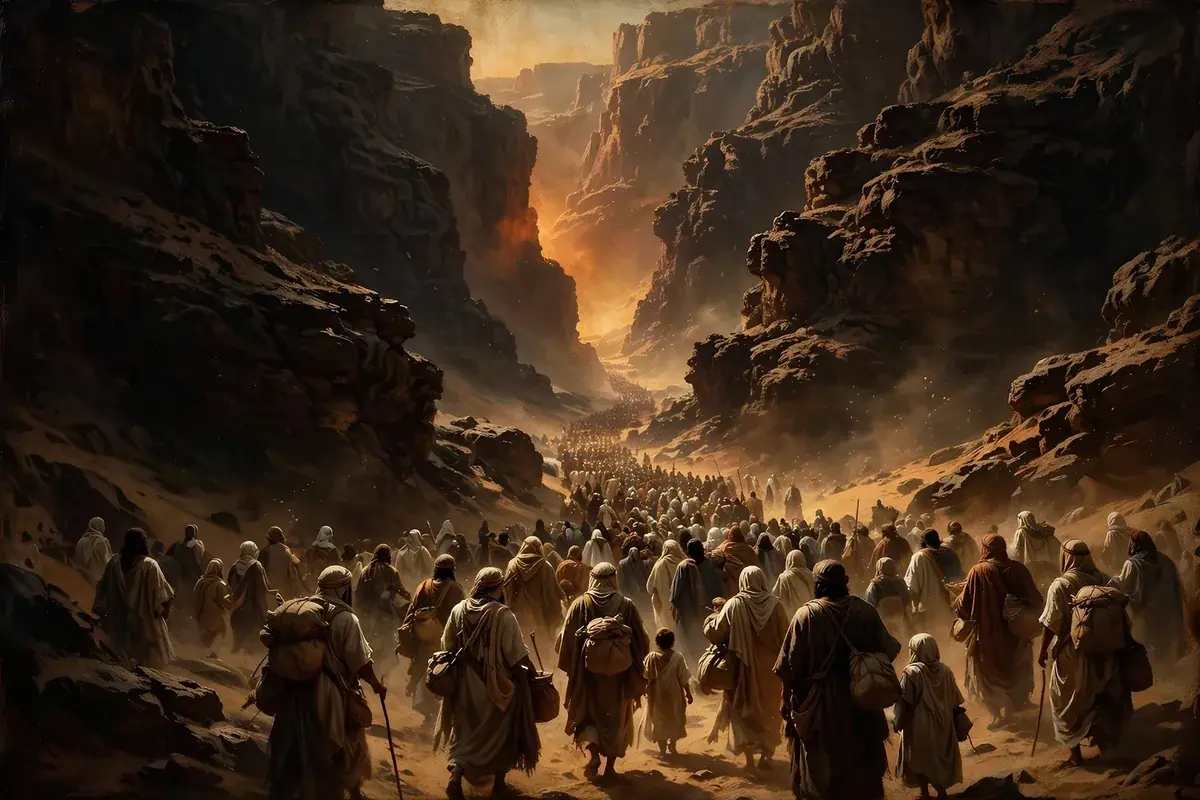
The second exodus is described as a deliverance from global dispersion. Scripture speaks about YAHUAH bringing His people from the east, west, north, south, and from the ends of the earth. Jeremiah even says the future regathering will become such a defining act that people will speak about it instead of only speaking about Egypt.
This is bigger than nostalgia.
It is prophecy moving toward fulfillment.
Isaiah 43 pushes the same direction. YAHUAH says He will bring His sons from afar and His daughters from the ends of the earth. Isaiah 41 says He took Jacob from the farthest regions and has not cast him away. That repeated language matters. The prophets are not describing a vague emotional restoration. They keep describing a real gathering from real places.
Jeremiah 23 makes the same point even sharper. He says the coming restoration will be so decisive that people will no longer speak only about YAHUAH bringing Israel out of Egypt, but about YAHUAH bringing the descendants of the house of Israel from the north country and from all the countries where they were driven.
That is why the phrase "Second Exodus" is not hype language.
It is an attempt to summarize a repeated prophetic witness.
The Prophets Keep Saying the Same Thing
One of the strongest things about this doctrine is that it does not rest on one isolated verse.
The witness is repeated:
- Isaiah says He gathers from the four corners of the earth
- Jeremiah says He gathers from all countries where He scattered them
- Ezekiel says He takes the children of Israel from among the nations and brings them into their own land
- Zechariah says He saves His people from east and west and brings them back to dwell in Jerusalem
- Amos says He plants His people in their land and they are not pulled up again
That repetition matters.
When Scripture repeats a theme across Torah, prophets, and later prophetic teaching, it is usually because YAHUAH does not want the point missed.
This Challenges Escape-Based End-Times Teaching
One reason this subject matters is because it confronts assumptions.
A lot of people were trained to think the main end-times hope is leaving before pressure comes. But passages like Jeremiah 30 describe Jacob's trouble and then speak about deliverance out of it, not removal before it starts.
Jeremiah does not flatten the future into comfort-first language. He describes trouble, yokes being broken, the scattered being saved from afar, and Jacob returning with rest. That sequence is why this subject collides with pre-trib assumptions so hard.
If you want the sequence worked through more directly, read What Does “Immediately After the Tribulation” Mean?. It helps keep this conversation grounded in actual wording rather than in popular systems.
The point is not fear.
The point is that Scripture describes endurance, correction, and rescue in a way that does not always match popular church systems.
The Wilderness Pattern Shows Up Again
Ezekiel describes YAHUAH bringing His people out from the nations and into the wilderness, where He will plead with them and purge rebels from among them.
That should sound familiar.
The first exodus had a wilderness testing period. The Second Exodus includes a wilderness purification pattern too.
That means restoration is not just transportation.
It is refinement.
That is one of the most important details in this whole study.
Many people want regathering language without purification language.
But Ezekiel does not allow that. He says YAHUAH will cause His people to pass under the rod, bring them into the bond of the covenant, and purge out the rebels. That means the Second Exodus is not just about where people end up. It is about who is actually willing to submit to the covenant.
So the pattern looks like this:
- scattering because of covenant rebellion
- awakening and return to YAHUAH
- gathering from the nations
- wilderness pleading and refinement
- entrance into restored covenant order
YAHUAH gathers, confronts, cleanses, and brings His people deeper into covenant. If that part feels heavy, stay close to What Is True Repentance?. Restoration language means nothing if the heart refuses correction.
The Restoration of Israel Is Part of the Same Prophecy
The Second Exodus and the restoration of Israel belong together.
Ezekiel 37 says YAHUAH will gather the children of Israel from the nations, bring them into their own land, and make them one nation again. The divided house will not stay divided forever.
That means this prophecy is not only about movement.
It is also about reunification, cleansing, kingship, and covenant order being restored.
The two-sticks prophecy matters here because it shows the restoration is not only individual. It is national and covenantal. Judah and Ephraim are not left as permanently fractured houses. YAHUAH says He will join them and make them one in His hand.
Then He says even more:
- they will no longer be two nations
- they will no longer be divided into two kingdoms
- He will cleanse them from their transgressions
- one king will be king over them all
That is why the restoration of Israel cannot be reduced to a vague spiritual feeling. Scripture describes actual reunification under righteous rule.
It also means replacement theology cannot carry this conversation. Scripture keeps speaking about Israel, Judah, remnant, land, regathering, and restoration in direct covenant terms.
If you need to slow down on that point, read Who Are the Chosen People in the Bible? and What the Bible Actually Says About Identity.
The Land Promise Is Still in View
Another reason this subject matters is because it pushes against the habit of over-spiritualizing everything.
The prophets do not only say the people will be restored emotionally. They keep saying they will be brought into their own land, dwell safely, build houses, plant vineyards, and inherit what was promised.
Ezekiel says they are brought into the land.
Jeremiah says they dwell in their own land.
Amos says they build and plant and are no longer pulled up.
Zechariah says they dwell in the midst of Jerusalem in truth and righteousness.
That does not sound like abstract symbolism.
It sounds like YAHUAH keeping covenant promises in a way that is visible and concrete.
How the Nations Fit Into the Restoration
This conversation also needs balance.
The restoration of Israel is central in the prophetic story, but Scripture does not present that restoration as if no one from the nations can attach themselves to YAHUAH.
Isaiah 56 says foreigners who join themselves to YAHUAH, love His name, keep His covenant, and refuse defilement are welcomed in His house. Isaiah also says YAHUAH gathers others besides the outcasts already being gathered.
At the same time, the prophets also speak about the nations being judged for how they treated YAHUAH's people and for scattering Israel. Joel 3 makes that tension clear.
So the frame is not:
- treating prophecy like a carnal hierarchy game
The frame is:
- mercy for those who join themselves to YAHUAH
- accountability for nations that oppose what He is restoring
Common Errors People Make With This Topic
There are a few ways people usually distort this subject.
1. Turning it into racial vanity
Scripture never gives people permission to use identity truth as fleshly arrogance.
2. Pretending it is only symbolic
The repeated language about land, gathering, nations, Judah, Israel, and one king is too concrete to flatten into metaphor only.
3. Studying restoration without repentance
If a person wants restoration promises but refuses covenant obedience, they are trying to take the comfort without the correction.
4. Using church tradition to silence plain prophecy
A lot of resistance to this subject comes from inherited systems, not from the text itself. That is why What the Bible Really Says vs What Church Teaches belongs near this study.
What This Means for Believers Now
The right response to this prophecy is not hype.
It is preparation.
The Second Exodus should press believers toward:
- repentance instead of spiritual drift
- covenant obedience instead of religious performance
- end-times readiness instead of fantasy
- identity clarity instead of confusion
- prayer instead of speculation
It should also make believers ask a more serious question than, "How do I win an argument about prophecy?"
The better question is, "Am I living in a way that agrees with the covenant YAHUAH is restoring?"
That means prophecy should produce:
- sobriety instead of fantasy
- endurance instead of escapism
- submission instead of speculation
And this prophecy is not presented as if foreigners are automatically shut out. Scripture also speaks about those from the nations joining themselves to YAHUAH and holding fast to His covenant. The issue is not carnal pride. The issue is whether people will align with what YAHUAH is restoring.
That is why the Prayer guide matters here. Prophecy without communion turns into argument fast.
What To Do Next
Study the pattern carefully.
Do not force Scripture to fit the system you inherited. Let the Word speak in its own sequence. The same Elohim who scattered Israel said He will gather Israel. That promise should shape how believers understand restoration, tribulation, and the Kingdom.
- Study the end-times hub: /topics/end-times
- Read the complete end-times guide: /blog/end-times-complete-guide
- Strengthen prayer and alignment: /blog/prayer-complete-guide
- Rebuild your foundation: /start-here
Final Thought
The Second Exodus is not really about religious drama.
It is about YAHUAH proving that His covenant words still stand.
He scattered.
He will gather.